What Happens To Excess Solar Power? Export, Store Or Waste It — A Guide For Byron Bay Homes
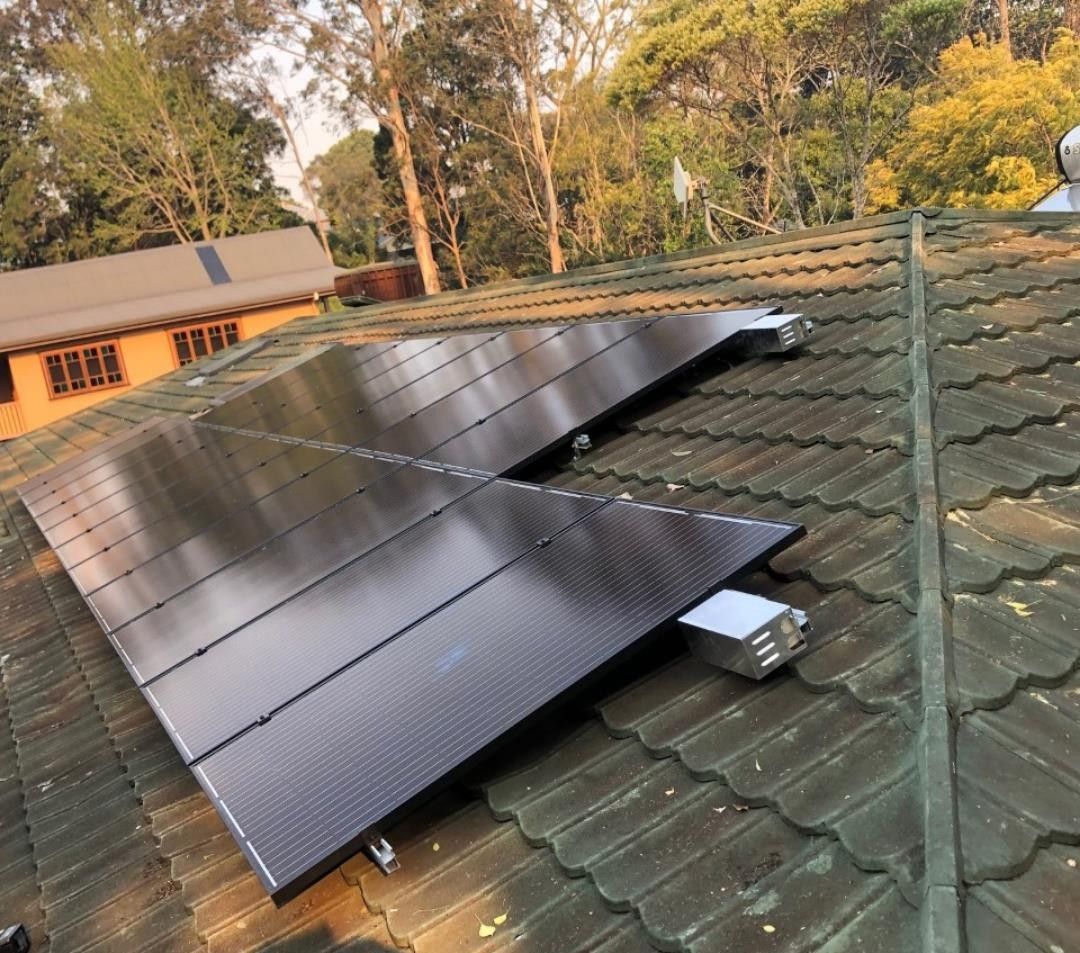
If your solar system generates more power than your home is using, that surplus doesn't just disappear — but what actually happens to it depends on your setup. In short: it's used in the house first, then pushed out through your inverter to the grid where it earns a feed-in credit, and if your export limit is maxed out, your inverter simply throttles back and that extra generation is never made at all. Understanding this chain is the key to working out what happens to excess solar power in your home, and whether you're leaving money on the table.
Quick Answer: Where Your Excess Solar Power Actually Goes
Every kilowatt-hour your panels generate follows the same basic path. First, it powers whatever's running in your home right now — the fridge, the TV, the aircon. Anything left over after that gets pushed through your inverter and out through your bi-directional (smart) meter to the Essential Energy network, where your retailer credits you at their feed-in rate.
But there's a catch most homeowners never hear about: if your system is generating more than the network's export limit allows, the inverter doesn't send that extra power out anyway — it curtails, or throttles back, production so the export limit isn't exceeded. That power isn't exported and isn't credited. It's never generated. This is the part of the story most solar explainers skip entirely, and it's often the missing piece when a homeowner's bill savings don't match what their system's rated output suggested they'd get.
Do You Get Paid for Solar Power You Don't Use? How Feed-In Tariffs Work in NSW
Yes — but the payment is modest, and it's dropping. In NSW, feed-in tariffs are guided by an annual benchmark set by IPART, the state's pricing regulator. For 2026–27, that benchmark sits at roughly 3.4 to 6.5 cents per kilowatt-hour, and retailers aren't required to match it — some offer more, some less, and a few have removed flat feed-in credits altogether for certain plans.
This means the honest answer to "do I get paid for solar power I don't use" is: yes, a small amount, and considerably less than what that same power would have saved you if you'd used it in your own home instead.
Why Exporting Is Worth Far Less Than Using It Yourself
This is the gap that catches most homeowners off guard. A kilowatt-hour used in your home offsets your full retail usage rate, typically somewhere around 29 to 37 cents per kilowatt-hour in NSW. That same kilowatt-hour, if exported instead, earns you only a few cents.
Put simply: self-consumption is worth several times more than exporting. If you're regularly out of the house during peak generation hours — a common pattern for two-income households — a large share of your system's output may be getting exported for a few cents on the dollar instead of offsetting the 30-odd cents you'd otherwise pay to import it later.
This is the single biggest reason solar savings often fall short of homeowner expectations, and it's something we see clearly when we review a household's actual monitoring data during a solar assessment.
What Is an Export Limit, and Is Your Inverter Being Throttled?
Northern Rivers homes connect to the Essential Energy network, which applies a fixed export limit to residential solar systems to protect grid stability — generally around 5kW per phase for standard connections, though some rural properties are restricted further, and flexible export arrangements can allow more when network capacity permits.
If your system is producing more than this limit, your inverter automatically curtails output rather than exceeding it. This can look like your generation flatlining or dipping around the middle of the day, even on a clear, high-sun afternoon — exactly the pattern many Byron Bay households notice without understanding why.
The good news is that a bigger array can still be worthwhile even with export limits in place. A larger system produces more usable power across a wider window of the day — mornings, afternoons, and cloudy days — even if its midday peak output is capped by the network. The capped hours are only part of the picture.
Store It or Send It? When a Battery Makes Sense for a Northern Rivers Home
Once you understand the export-versus-self-consumption gap, the natural next question is whether a battery is worth it. If you'd rather keep that surplus than sell it for a few cents, it's worth understanding how solar batteries store excess energy before you commit to storage.
A battery genuinely earns its keep for households that are home in the evenings and drawing significant power after the sun goes down, for higher-usage households generally, or for rural properties where the sun exposure is strong but grid supply can be less reliable. For rural properties in the Northern Rivers where grid supply is limited or unreliable, off-grid solar systems take the idea further by using every kilowatt-hour on site rather than relying on the grid at all.
That said, a battery isn't the right purchase for every household. If your usage is modest and your feed-in rate is reasonable, staying grid-tied without a battery can genuinely be the better financial call — the payback period on storage simply doesn't stack up for every situation, and we'll say so plainly if that's what your numbers show.
Free Ways to Use More of Your Own Solar Before You Buy Anything
Before spending anything on a battery, the first and most cost-effective step is load shifting — running your highest-draw appliances during the hours your system is actually generating the most. For most Northern Rivers homes, that's roughly 10am to 3pm.
Shifting the pool pump, dishwasher, washing machine, hot water system, and EV charging into this window is effectively the free version of a battery: it captures more of your own generation for your own use, at no extra cost. This region's high solar exposure means the midday surplus is often larger here than it is further south, which makes load shifting a genuinely bigger lever locally than in cooler, cloudier parts of the state. It's the first thing we suggest to every household before any conversation about storage even starts.
It's also worth keeping panel performance in check over time — coastal humidity and salt air in this region can gradually affect output, so a periodic system check ensures none of this surplus is being quietly lost to grime or ageing components. If your exports have dropped away without explanation, our team can check the system as part of our solar repairs and servicing.
Find Out What's Really Happening to Your Solar
Every home's export-versus-store equation looks a little different, depending on your usage patterns, your system size, your export limit, and your feed-in plan. The only way to know for sure what happens to excess solar power in your specific case is to look at your actual bills and monitoring data.
Considering solar in Byron Bay? We offer a free on-site solar assessment where we review your real export figures, measure your usage patterns and any shading issues, and give you an honest read on whether load shifting, a battery, or leaving things as they are is the right move for your home. If you're weighing up a new system or an upgrade, our team can size it around how much power you actually use during the day, not just how much roof you have.